What it is
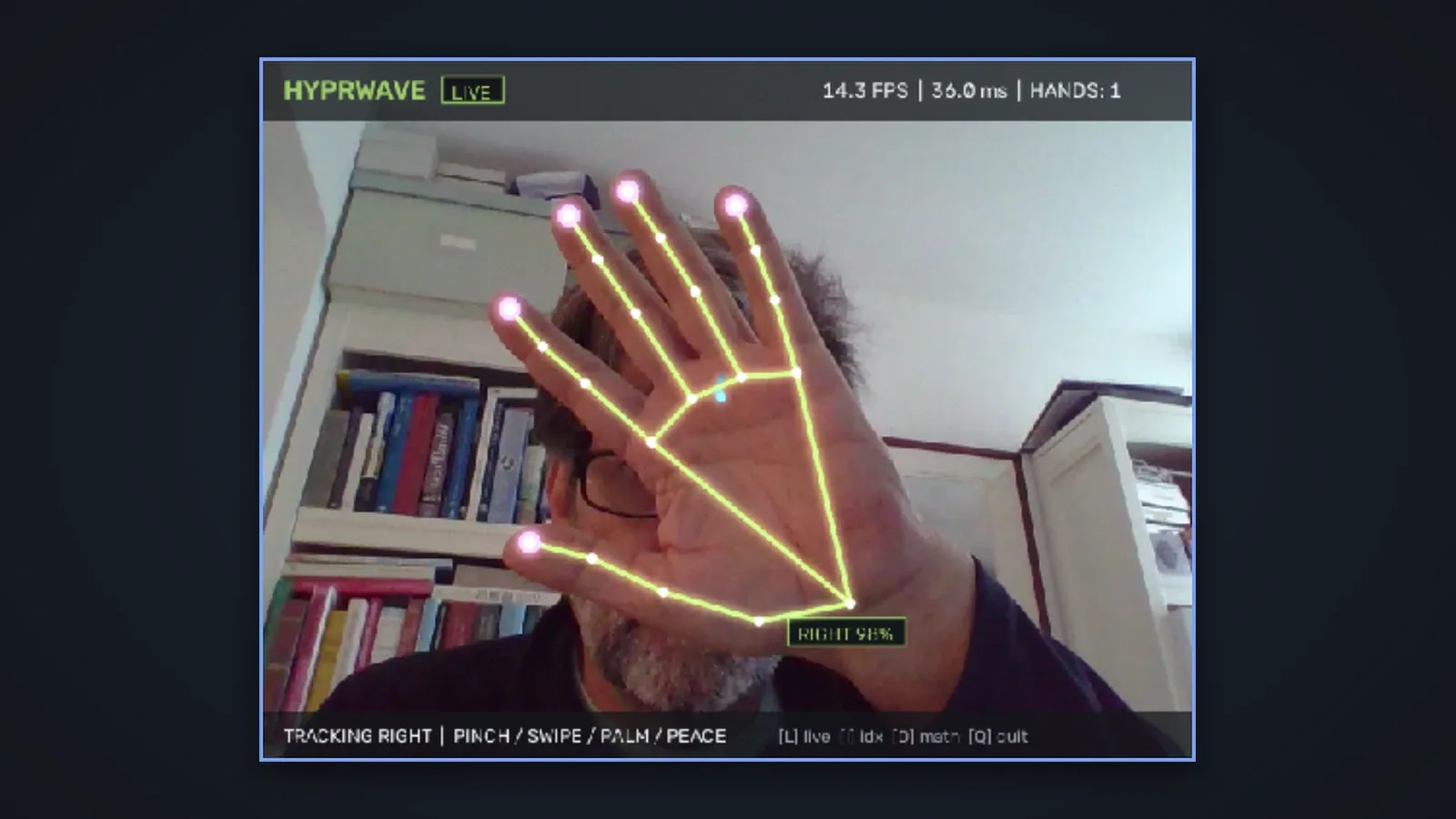
HyprWave turns a webcam into a remote for the desktop. Pinch and drag to change the volume or the screen brightness, swipe to switch workspaces, hold an open palm to play or pause, hold a peace sign to mute. A small window pinned over every workspace shows the hand skeleton it is tracking, and it starts in a demo mode that changes nothing until you arm it.
It runs on my 2017 Google Pixelbook under Omarchy and Hyprland: two fanless cores, no GPU, and no video leaves the machine. MediaPipe tracks the hand at 14 to 17 frames a second and drops to 4 when no hand is in view.
Read more
- Source on GitHub, MIT licensed, with a quick start and the full gesture table.
- The step-by-step tutorial: the build from webcam frames to desktop control.
- The case study: the constraints, three failures that only showed up on real hardware, and the guardrails that make the gestures trustworthy.